The hardest part of a disagreement isn’t always what the other person says. Sometimes, it’s how deeply their words affect you.
A small criticism can feel like rejection. Someone becoming emotionally distant can trigger intense worry. Even a healthy relationship may feel uncomfortable when you’re constantly expecting something to go wrong.
These reactions don’t always begin with the relationship you’re in today.
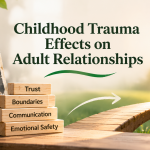
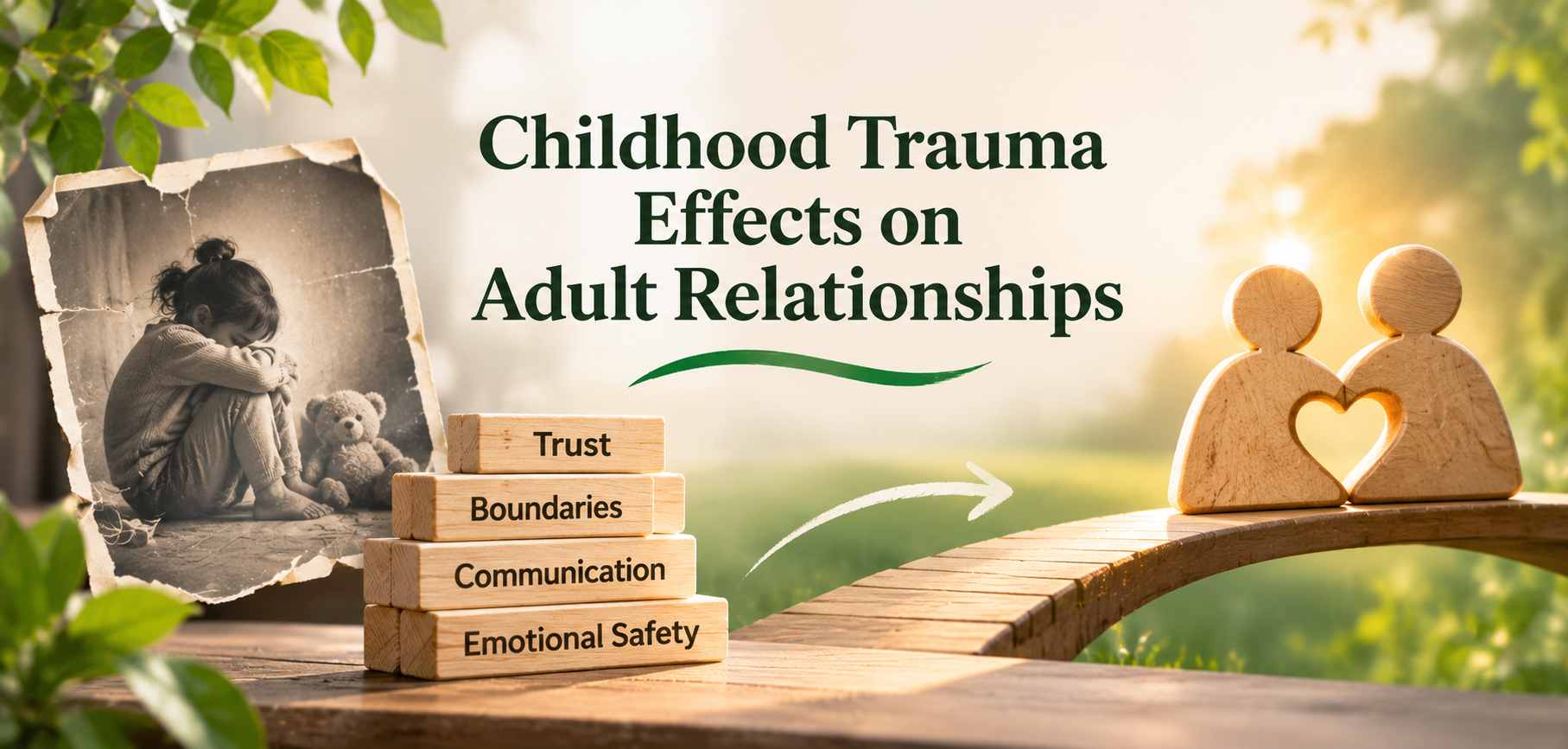
Childhood trauma can influence how adults experience trust, emotional closeness, conflict, and personal boundaries. Experiences from early life may shape what feels safe, threatening, familiar, or uncomfortable in relationships years later.
But having a difficult childhood doesn’t mean you’re destined to struggle with relationships forever.
At Empowering Minds Therapy, trauma counseling focuses on helping people understand difficult emotional experiences and develop practical coping skills.
Recognizing the connection between your past and present can be a useful starting point, especially when the same relationship difficulties keep returning despite your efforts to change them.
Key Takeaways
- Childhood experiences can influence adult relationships by shaping expectations about trust, emotional safety, communication, and closeness.
- Fear of abandonment, people pleasing, emotional withdrawal, and difficulty setting boundaries can sometimes be connected to earlier experiences.
- Recognizing emotional triggers helps separate past fears from concerns in the present relationship.
- Healthy relationships and professional counseling can support recovery, but progress does not require ignoring current problems or forcing forgiveness.
What Are Childhood Trauma Effects and Why Can They Last Into Adulthood?
Childhood trauma refers to experiences that are deeply distressing or threatening during a person’s early development.
These may include physical or emotional abuse, neglect, exposure to violence, or living in an environment where safety and emotional support are unreliable.
Not every difficult childhood experience is traumatic, and people respond differently to adversity.
Children depend on caregivers and other trusted adults for protection, stability, and emotional guidance.
When those needs go unmet repeatedly, children may develop ways to respond that help them cope with unpredictable circumstances.
Some learn to stay quiet to avoid conflict. Others become especially alert to changes in someone’s mood. Some may find it difficult to ask for help because doing so previously led to criticism or disappointment.
These responses can become familiar patterns, even after the original circumstances have changed.
The Centers for Disease Control and Prevention (CDC) explains:
“Adverse childhood experiences (ACEs) are associated with numerous negative outcomes.”
In a 2023 CDC report on adverse childhood experiences, researchers found that 63.9% of surveyed U.S. adults reported at least one adverse childhood experience, based on data collected from 2011 through 2020.
This does not mean everyone who experienced adversity has trauma-related symptoms or relationship difficulties.
It shows why understanding childhood adversity is an important part of discussions about adult emotional health.
How Can Childhood Trauma Affect Your Adult Relationships?
Childhood trauma may affect adult relationships by changing how someone responds to emotional closeness, disagreement, uncertainty, and perceived rejection. Some people become highly sensitive to signs of abandonment, while others avoid vulnerability or struggle to communicate their needs. These patterns can develop as attempts to feel safe rather than deliberate relationship choices.
Here are several ways these experiences may appear in everyday adult relationships.
1. Trust Can Feel Difficult Even When Someone Is Consistent
Trust develops through repeated experiences of reliability, honesty, and emotional safety.
When important people were unpredictable or harmful during childhood, trusting others may feel risky.
As an adult, you may find yourself questioning someone’s intentions, expecting disappointment, or needing frequent confirmation that a relationship is stable.
These feelings can be especially confusing when you recognize that the other person has not given you a clear reason to distrust them.
What helps: Focus on observable behavior over time rather than demanding immediate certainty.
Pay attention to whether people respect boundaries, follow through on commitments, and take responsibility for mistakes.
Trust doesn’t need to happen all at once. It can develop gradually through consistent experiences.
2. Fear of Abandonment Can Make Normal Distance Feel Threatening
A fear of abandonment can make relationship uncertainty particularly uncomfortable.
Delayed responses, changes in plans, or a loved one’s need for personal space may produce more distress than the situation itself appears to warrant.
You may notice a strong need for reassurance or feel responsible for keeping everyone emotionally close.
These feelings sometimes reflect earlier experiences of separation, inconsistency, or emotional neglect.
However, relationship anxiety can have several causes, and not every concern about distance is rooted in childhood.
What helps: Identify what you know before deciding what someone else’s behavior means.
Communicate your need for reassurance directly when appropriate, rather than repeatedly checking for signs of rejection.
3. Emotional Intimacy May Feel Uncomfortable
Wanting a close relationship and feeling safe within one are not always the same experience.
Some adults find it difficult to express sadness, affection, disappointment, or personal needs.
Emotional openness may feel risky when vulnerability was previously met with criticism, punishment, or dismissal.
You might prefer handling problems alone, withdrawing during emotionally intense conversations, or minimizing feelings that deserve attention.
What helps: Begin with small, honest conversations with people who have shown themselves to be trustworthy.
You do not need to disclose your entire personal history to build emotional closeness.
Healthy intimacy involves both connection and the freedom to choose what you share.
4. Conflict May Trigger Strong Emotional Reactions
Disagreements are a normal part of relationships.
However, conflict can feel threatening when childhood involved frequent arguments, unpredictable anger, intimidation, or emotional instability.
Even a calm disagreement may bring physical tension, fear, anger, or an urge to leave the conversation.
Some people respond by becoming defensive. Others shut down or agree with everything to end the discomfort.
What helps: Learn to recognize your physical and emotional reactions before continuing a difficult discussion.
When appropriate, ask for a short break and agree on a time to return to the conversation.
The objective is not to avoid every disagreement. It’s to discuss problems without sacrificing emotional safety or mutual respect.
5. People Pleasing Can Replace Healthy Boundaries
When acceptance felt dependent on behavior during childhood, prioritizing other people’s needs may become a familiar habit.
You may struggle to say no, express preferences, or disagree without feeling guilty.
Constantly managing other people’s emotions can also leave little space for your own needs.
Over time, this can contribute to emotional exhaustion, resentment, and unequal relationships.
What helps: Start with small boundaries that reflect your actual needs.
Being considerate does not require automatic agreement.
A healthy relationship should allow room for both people’s feelings, responsibilities, and personal limits.
Why Do Some Childhood Experiences Make Adult Relationships Feel Unsafe?
The connection often involves how people learn to recognize and respond to emotional danger.
During childhood, repeated exposure to threatening or unpredictable circumstances can influence stress responses and expectations about relationships.
As an adult, your body may react strongly to situations that resemble earlier experiences, even when the present circumstances are different.
This is sometimes described as an emotional trigger.
A trigger is not always a clear memory. It may involve a particular tone of voice, a type of disagreement, or a feeling of being ignored.
People can experience physical tension, anxiety, anger, numbness, or an urge to withdraw.
Importantly, a strong emotional reaction does not prove that someone has unresolved childhood trauma.
Current stress, relationship problems, mental health concerns, and other experiences can produce similar responses.
The useful question is not simply why the feeling is happening, but whether your reaction matches the current situation and what support might help.
What Childhood Trauma Effects Can Look Like in Everyday Relationships
Understanding patterns is more useful than labeling yourself as damaged or difficult.
The table below connects common relationship struggles with practical responses.
| Relationship pattern | What may be happening | A practical response |
| Constantly seeking reassurance | Fear of rejection or uncertainty | State your need directly and observe consistent behavior |
| Avoiding difficult conversations | Conflict feels emotionally threatening | Prepare one concern and discuss it when you feel ready |
| Struggling to say no | Fear of disappointing others | Set one manageable boundary and practice maintaining it |
| Pulling away when relationships become serious | Emotional closeness feels uncomfortable | Explore what feels unsafe and communicate at a comfortable pace |
| Taking criticism very personally | Negative feedback activates shame or self-doubt | Separate the specific feedback from your overall self-worth |
| Feeling responsible for everyone’s emotions | Habitual monitoring of others’ moods | Recognize which emotions and decisions are actually your responsibility |
These patterns can have multiple explanations.
They are observations worth exploring, not a checklist for diagnosing childhood trauma.
Can Childhood Trauma Influence Your Attachment Style?
Early caregiving experiences may influence attachment, which refers to patterns of seeking closeness, support, and security in relationships.
People often hear terms such as secure, anxious, avoidant, and disorganized attachment.
These categories can provide a framework for understanding relationship tendencies, but they are not permanent personality labels or diagnoses.
Someone who worries about abandonment may recognize aspects of anxious attachment.
A person who consistently distances themselves during emotionally close interactions may recognize avoidant tendencies.
However, attachment patterns are influenced by many factors, including later relationships and life experiences.
Your childhood does not permanently determine your attachment style.
Repeated experiences of healthy communication, reliability, and appropriate support can help people develop different ways of relating to others.
Rather than asking which label fits you perfectly, consider which relationship habits are helping you and which ones are causing distress.
That creates a more practical starting point for change.
How Can You Start Healing Childhood Trauma Effects in Your Relationships?
Healing involves recognizing patterns, developing safer responses, and building relationships where emotional needs and boundaries can be respected.
It is not about forcing yourself to revisit painful memories or pretending earlier experiences no longer matter.
A useful way to organize this process is the TRACE Method.
Step 1. Track the Emotional Trigger
Notice which interactions create a reaction that feels especially intense.
Pay attention to changes in your breathing, muscle tension, thoughts, or urge to withdraw.
Identify the feeling without immediately deciding what caused it.
The goal is to recognize your response before acting automatically.
Step 2. Recognize the Thought Behind the Feeling
Ask yourself what the interaction means to you.
Are you expecting rejection? Assuming someone is angry? Feeling responsible for preventing conflict?
Write down the thought as a possibility rather than a fact.
This helps create some distance between an emotional reaction and your interpretation of another person’s intentions.
Step 3. Assess What Is Happening Now
Consider what you can actually observe in the present relationship.
Has someone violated a boundary? Is there evidence of dishonesty or threatening behavior? Or are you responding to uncertainty without enough information?
Past experiences may influence your reaction, but current concerns still deserve serious attention.
Do not dismiss genuine mistreatment as something you simply need to overcome.
Step 4. Communicate One Clear Need
When the relationship is safe enough for open communication, explain what you need without expecting the other person to guess.
Useful phrases include:
- “I need some time before continuing this conversation.”
- “I’d like us to discuss this without raising our voices.”
- “I’m not comfortable agreeing to that.”
- “I want to understand what you meant before I respond.”
You can be respectful without minimizing your feelings.
Step 5. Evaluate What Changes
Notice whether your response helped you communicate more clearly or maintain a healthy boundary.
Pay attention to the other person’s behavior as well.
Progress is not measured only by whether you feel less anxious.
It also involves recognizing which relationships support your well-being and which continue to harm it.
Remember TRACE: Track, Recognize, Assess, Communicate, Evaluate.
This framework is a self-reflection tool, not a replacement for trauma treatment.
What Do People Often Get Wrong About Healing Childhood Trauma?
Misunderstandings about trauma recovery can create pressure and unrealistic expectations.
Mistake 1. Thinking Every Relationship Problem Comes From Childhood
Your early experiences may influence relationship patterns, but current circumstances matter too.
Communication problems, incompatible expectations, ongoing stress, or harmful behavior can exist independently of childhood trauma.
Do this: Examine both your personal reactions and the actual relationship dynamics.
Not that: Automatically blame your childhood whenever a relationship becomes difficult.
Mistake 2. Believing Healing Requires Forgiving Everyone
Forgiveness is a personal decision, not a requirement for recovery.
You can acknowledge harm, develop emotional awareness, and establish boundaries without reconnecting with someone who hurt you.
Your safety and well-being remain important.
Mistake 3. Trying to Change Everything Immediately
Longstanding habits may take time to recognize and adjust.
Attempting to fix every emotional reaction at once can become overwhelming.
Choose one pattern to work on and assess your progress gradually.
Mistake 4. Assuming You Must Recover Alone
Independent coping skills are valuable, but they are not the only form of support.
Trusted relationships and appropriate professional counseling may provide additional opportunities to understand difficult experiences.
Seeking help does not mean you have failed to manage your emotions.
How Do You Know When a Relationship Is Healthy Rather Than Familiar?
Familiarity can sometimes be mistaken for emotional safety.
Relationships that involve unpredictable attention, frequent criticism, or repeated boundary violations may feel recognizable to someone who experienced similar patterns earlier in life.
But familiar behavior is not necessarily healthy behavior.
Look at how the relationship functions over time.
Healthy relationships generally involve respect, honest communication, room for disagreement, and shared responsibility.
You should be able to express reasonable needs without routinely facing intimidation or punishment.
It is also important to distinguish ordinary relationship discomfort from ongoing abuse.
If someone is threatening, controlling, or repeatedly violating your boundaries, the solution is not simply to become less emotionally reactive.
Prioritize safety and seek appropriate support.
Understanding your past can help explain your reactions, but it should never be used to excuse harmful treatment in the present.
When Should You Consider Therapy for Childhood Trauma?
Professional counseling may be helpful when emotional patterns repeatedly interfere with your relationships, daily functioning, or sense of safety.
Reasons to seek support can include:
- Persistent difficulty trusting people.
- Strong emotional reactions that feel hard to manage.
- Repeated avoidance of closeness or conflict.
- Distressing memories or reminders of past experiences.
- Difficulty setting or maintaining personal boundaries.
- Shame, anxiety, or low self-worth affecting relationships.
Not everyone with childhood adversity needs formal treatment, and different people benefit from different approaches.
A licensed mental health professional can help assess your concerns and discuss appropriate treatment options.
Some approaches focus on coping skills and emotional regulation. Others may address trauma-related memories or beliefs when clinically appropriate.
You should also be able to ask questions about the therapist’s experience, treatment approach, privacy practices, and the pace of counseling.
How Empowering Minds Therapy Can Help
Empowering Minds Therapy provides counseling for trauma, abuse, relationship difficulties, anxiety, and related emotional concerns.
Rhiannon Cruz, MS, LPC, emphasizes individualized, collaborative care that supports emotional understanding and practical coping skills.
For adults experiencing relationship difficulties connected to earlier experiences, counseling can provide space to explore recurring patterns, identify emotional needs, and work toward healthier communication.
The practice also describes virtual counseling options for eligible clients.
The goal is not to erase your past or change your personality. It is to develop a clearer understanding of your experiences and make choices that support your present well-being.
Final Thoughts on Childhood Trauma and Adult Relationships
Early experiences may help explain why certain relationships feel difficult, why conflict brings intense emotions, or why asking for what you need can feel uncomfortable.
But understanding the past should not become another reason to criticize yourself.
Childhood Trauma Effects do not determine the quality of every relationship you will have.
Recognizing patterns, communicating needs, maintaining boundaries, and seeking support when necessary can help you respond differently to challenges.
You do not have to understand every childhood experience before making a meaningful change in your relationships.
Start by identifying one pattern that deserves attention and one healthier response you can practice.
Frequently Asked Questions
Can Childhood Trauma Affect Relationships Even If You Don’t Remember Everything?
Yes. People do not always have clear or complete memories of difficult childhood experiences. Emotional reactions and relationship habits can develop without detailed recall. However, memory gaps or current relationship problems alone do not prove trauma occurred, and therapy should not be used to force or manufacture memories.
Can Emotional Neglect During Childhood Affect Adult Relationships?
Yes. Childhood emotional neglect may influence how some adults express feelings, request support, or respond to emotional closeness. Someone who had limited emotional support may find vulnerability uncomfortable. These patterns are not inevitable, and supportive relationships and appropriate counseling can help people develop healthier communication habits.
Why Do Some Adults With Childhood Trauma Fear Abandonment?
Fear of abandonment may be connected to early experiences of separation, inconsistent support, or emotionally unpredictable relationships. These experiences can influence expectations about whether important people will remain available. However, abandonment fears have multiple possible causes and should be understood in the context of the individual’s circumstances.
Can Childhood Trauma Make It Difficult to Trust a Romantic Partner?
Yes. Some people who experienced harmful or inconsistent caregiving find trusting a romantic partner difficult, even when the partner behaves reliably. Building trust may involve examining fears, observing present behavior, and communicating openly. Trust should develop through demonstrated reliability rather than pressure to ignore legitimate concerns.
Does Childhood Trauma Always Cause an Insecure Attachment Style?
No. Childhood trauma does not automatically determine a person’s adult attachment pattern. Attachment is influenced by early relationships, later experiences, and other individual factors. People can develop healthier relationship habits through supportive connections, self-awareness, and professional help when needed. Attachment labels are not clinical diagnoses.
Can Childhood Trauma Affect Friendships and Family Relationships Too?
Yes. Earlier experiences may influence friendships, family communication, and workplace relationships, not only romantic partnerships. Difficulty setting boundaries, trusting others, or managing disagreements can appear across different relationships. Examining where these patterns occur may help identify concerns that could benefit from support.
Can You Improve Relationship Patterns Without Contacting the People Who Hurt You?
Yes. Recovery does not require confronting, forgiving, or reconnecting with someone who caused harm. You can work on emotional regulation, boundaries, self-understanding, and supportive relationships independently of that person. When contact could create emotional or physical danger, maintaining distance may be an appropriate part of protecting yourself.
How Long Does It Take to Work Through Childhood Trauma in Therapy?
There is no fixed timeline. The duration of counseling depends on individual needs, symptoms, treatment goals, available support, and the approach being used. Some people begin by learning coping skills, while others need more extensive treatment. A therapist can help review progress and adjust goals over time.
Can Empowering Minds Therapy Help With Trauma-Related Relationship Difficulties?
Empowering Minds Therapy lists trauma and relationship difficulties among its counseling services. A consultation can help determine whether the practice’s approach is suitable for your concerns. Treatment may focus on emotional understanding, coping skills, and communication goals, depending on the clinician’s assessment and your individual needs.